

Today, like many days,
I’m meeting you in a moment where I can still wear my brave face.
But this is not the reality of what I can sustain for a whole day when I’m in a flare.
And this isn’t just true for me.
It’s true for so many living with this illness.
I’m not sharing this for pity or attention.
I’m sharing because invisible illnesses are too often carried quietly, and silence can make people disappear.
ME/CFS is not “just being tired.”
It is a complex systemic illness that touches every part of life.
A body that no longer speaks the language it once knew.
For me, it’s been over a decade of learning how to survive inside a body fighting invisible battles.
I was officially diagnosed with ME/CFS in early 2019, but I had been struggling long before anybody could put a name to what was happening to me.
A few years before that, I went to university.
I did really well — but only because I overworked myself relentlessly.
I was terrified of failing.
So I overworked.
Overachieved.
Overrode every signal my body tried to send me.
Then came a full-time job that I truly loved, but underneath it all, I was struggling.
Struggling to remember things.
Struggling to keep appointments on time.
Struggling to stay on top of everything the way everyone else seemed able to.
I wanted to be as helpful as I possibly could, so I pushed myself beyond my limits trying to give
the best support I could.
I was terrified of letting anyone down.
So I compensated the only way I knew how:
By pushing harder.
Working longer.
Trying more.
People pleasing.
Running on stress and adrenaline while quietly drowning underneath it all.
What I didn’t know then — and only discovered last year — was that I had ADHD too.
Suddenly, so much of my life made sense.
The overwhelm.
The anxiety.
The constant feeling that everything took more effort for me than it seemed to for other people.
I had spent my whole life unknowingly fighting my own brain while trying to appear capable.
Getting frustrated with myself for struggling.
Deep down, I knew I wasn’t managing the way everyone else seemed to be.
Years ago, ADHD wasn’t recognised the way it is now, especially in women.
Getting diagnosed was deeply validating because it explained so much of why I had struggled for so long.
I truly believe the years of stress, pressure, anxiety, overcompensating, and living in a constantly overwhelmed nervous system played a huge role in my health declining.
Alongside ADHD, I also experienced a traumatic period of my life in childhood.
Research now shows that trauma, chronic stress, nervous system dysregulation, and prolonged periods of survival mode may play a significant role in the development of illnesses like ME/CFS for some people.
The ME/CFS all seemed to be start when I got viral infection after viral infection.
Constant flu-like symptoms that never fully seemed to leave my body.
Then on our honeymoon, I got E. coli.
Every weekend after a week of work, my body would crash.
Any time we went on holiday, I became ill.
The consultant who diagnosed me said the recurring infections were significant triggers on top of the constant stress my body had been carrying since I was a little girl —
leaving my immune system vulnerable long before I realised it.
I know everybody’s experience is different.
This is simply how it unfolded for me.
For me, ME/CFS feels like:
A nervous system always braced for danger.
Pain sometimes intense that never fully leaves.
Heavy limbs.
A mind wrapped in fog thick enough to lose myself inside.
Sometimes I search for words and cannot find them.
Sometimes I fear people may think I am lazy, stupid or weak — though deep down, I know I am none of those things.
It’s waking each morning not knowing which version of myself I’ll get.
Will it be the version of me that can laugh, clean the kitchen, answer messages, and pretend life feels normal for a moment?
Or the version that cannot lift her head from the pillow.
Whose bones ache like bruises.
Whose voice costs too much energy to use.
Whose heart races unpredictably.
Who feels dizzy standing.
Who feels so inflamed it’s like burning from the inside out.
One day I can do something.
The next day I cannot.
Over time, trust in my own body begins to fracture.
Living with ME/CFS feels like living with a phone battery that never fully charges.
I ration everything carefully:
Every conversation.
Every task.
Every emotion.
Because one wrong choice, one moment of pushing too far, can steal days, weeks, or months through the cruel crash of post-exertional malaise.
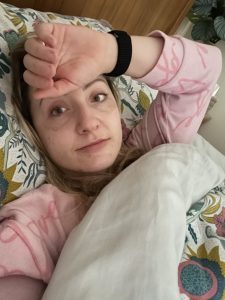
On good days, I almost remember who I was before this.
On bad days, even breathing feels expensive.
I rest, but never feel refreshed.
And still, life keeps moving.
My children still need feeding.
Laundry still waits.
School runs still happen.
I’ve learned how to wear “well” convincingly while nobody sees the hours of rest wrapped around those moments just to make them possible.
When I’m well enough to leave the house, I still do my hair and makeup because it helps me feel human again for a little while.
People see a relatively normal face, but they do not see the weight being carried underneath it.
And because the world cannot see it, I sometimes start hiding it too.
Smiling through pain.
Pushing through exhaustion.
Holding it together just a little longer.
Partly for survival.
Partly denial.
Partly because society teaches us that struggle makes people uncomfortable.
Modern life praises productivity, pushing harder, carrying on.
But this illness does not respond to force.
It punishes overdoing.
It asks for stillness, gentleness, reduced load — the opposite of what the world rewards.
Everything costs energy.
A conversation costs.
A school run costs.
Replying to a message costs.
And so sometimes my life looks like:
Cancelled plans.
Missed birthdays.
Unanswered texts.
Another apology typed with trembling hands.
One of the hardest parts is disappointing the people I love when I care so deeply.
And even when I physically cannot do more, the guilt still cuts deep.
I know I can’t control it, so there’s no point getting upset.
But I do.
And that consumes even more of my already limited energy.
It becomes a vicious cycle.
There are days when I cannot even help myself.
The guilt is relentless.
Guilt for needing help.
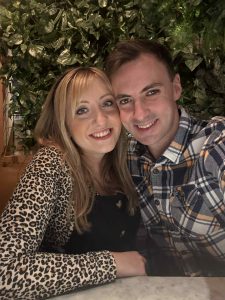
Guilt for the weight my husband carries.
For the exhaustion in his eyes while he works full time, helps with the children, supports our home, and still gives me a shoulder to cry on.
Sometimes I tell him he deserves someone healthy.
But he stays, thank goodness.
He has more faith and patience than I do at times.
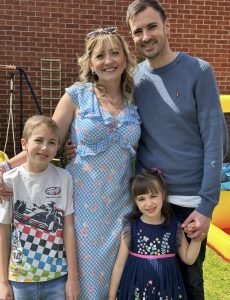
And then there’s the grief for the moments this illness steals from my children.
For the times they want to play but I’ve already reached my energy limit.
This illness ripples outward into marriages, families, friendships, finances, careers, identity, self-worth, and mental health.
Into the quiet spaces between people who love each other deeply but are both exhausted.
I crave connection, laughter, normality — but some days I barely have enough energy to survive the day at home.

And because medical answers are limited, so many of us become the researcher, the investigator, the advocate, and the experiment.
Some medical professionals still don’t fully understand ME/CFS.
I’ve been met with:
“Could it just be depression?”
“Have you tried paracetamol for the pain?”
As though I haven’t already tried everything available to me.
And then the blood tests come back “normal,” which feels impossible to understand when you feel so unwell but still have no answers as to why.
But standard lab tests do not measure the subtle cellular, mitochondrial, metabolic, and nervous system dysfunctions involved in this illness.
So many of us are left piecing together our own survival plans.
Researching pacing, nutrition, nervous system regulation, supplements, alternative treatments — anything that might help us function better.
Because there is currently no cure.
And doing nothing feels terrifying.
Recovery is not linear.
Sometimes it feels like one step forward and two steps back.
Sometimes it takes months just to rebuild a tiny part of myself again.
And healing while still carrying responsibilities is incredibly hard.
I may desperately need rest, reduced stress, and space to recover — but life does not pause when you’re unwell.
So begins the boom-and-bust cycle:
Doing too much on the good days just trying to reclaim pieces of my life.
And when my body loosens its grip, even slightly, I rise and try again.
Trying is not failure.
Trying is essential.
But healing cannot be forced through punishment or pushing past energy limits.
I have to find my body’s baseline again — the quiet place where energy can exist safely.
Capacity has to be rebuilt slowly.
With gentleness.
Patience.
Compassion.
Teaching my nervous system that it is safe to soften again.
I have so much to be grateful for in this life.
But I still grieve the woman I thought I would be.
The career I trained for.
The version of me that wants to give more, do more, be more.
This is only my experience of Myalgic Encephalomyelitis/Chronic Fatigue Syndrome.
I sit somewhere between mild and moderate — though those words feel far too gentle for what this illness takes.
Because debilitating does not always look catastrophic.
Some people are trapped in darkened rooms.
Bedbound.
Unable to feed themselves.
Bodies intolerant to light, sound, and stimulation.
They are the Millions Missing.
The unseen severity.
People die from this illness.
And many who suffer most do not have the strength to explain their suffering.
So I want to speak not only for myself, but for all of us.
So when somebody looks well,
looks normal,
smiles,
shows up once and then disappears —
remember:
You are only seeing a fragment.
Not the recovery.
Not the crash.
Not the hours spent repaying borrowed energy.
This illness steals far more than plans.
And too often, it teaches people not to believe us.
So the body suffers.
And then we are asked to carry the weight of disbelief too.
I’m sharing this because so many people are silently carrying illnesses the world cannot see.
Speaking honestly about it creates understanding, connection, and compassion.
And if even one person feels less alone after hearing this —
then it was worth the energy it cost me to share.